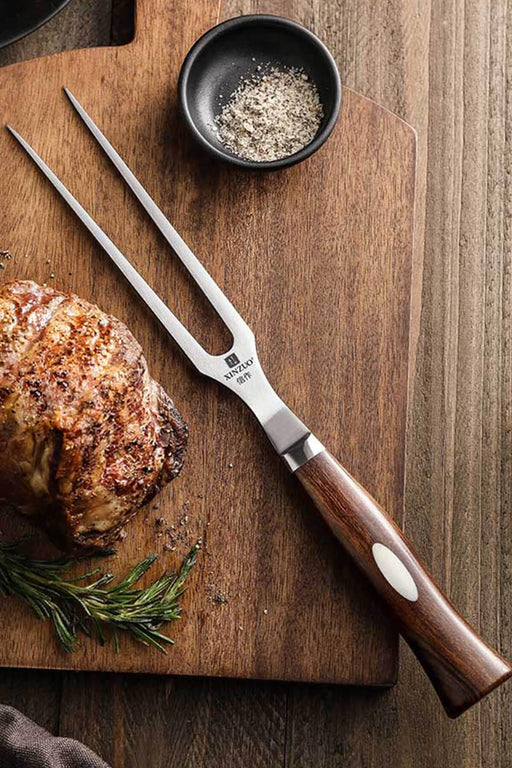
Mastering the art of carving meat not only enhances the presentation of your culinary creations but also ensures an even distribution of flavors and textures. Choosing the right tools for this task is essential, and the carving fork is a critical component. A well-designed carving fork provides the necessary grip and control, making the process more efficient and enjoyable. Whether you are a seasoned chef or a home cooking enthusiast, understanding the nuances of a carving fork can elevate your cooking experience.
Why a Carving Fork is Essential in the Kitchen
A carving fork, often overlooked, plays a pivotal role in the kitchen. Its design is tailored to:
- Securely hold meat in place while carving, minimizing movement and enhancing precision.
- Provide a comfortable grip, reducing hand fatigue during extended use.
- Assist in transferring cooked meats from the carving board to the serving platter.
Choosing the Right Carving Fork
Selecting the appropriate meat fork involves considering several factors:
- Material: Stainless steel is preferred for its durability and ease of maintenance.
- Length: Longer forks offer better leverage and reach, especially for larger cuts of meat.
- Handle Design: Ergonomic handles ensure a secure and comfortable grip.
A high-quality fork for meat should balance aesthetics with functionality, contributing to both the efficiency and enjoyment of the carving process.
Enhancing Your Cooking with the Right Technique
Even with the best tools, technique is essential for achieving perfect slices. Here are a few tips to keep in mind:
- Allow the meat to rest after cooking to redistribute juices and make slicing easier.
- Use the meat carving fork to firmly hold the meat in place.
- Carve against the grain to produce tender slices.
Adopting these practices not only improves the quality of your meat dishes but also enhances the dining experience for your guests.
Maintaining Your Carving Fork
Proper care of your carving meat fork will ensure its longevity and continued performance. Consider the following maintenance tips:
- Clean immediately after use to prevent food residue from hardening.
- Hand wash with mild detergent to maintain the integrity of the material.
- Store in a dry place to avoid rust and corrosion.
Conclusion
A well-chosen carving fork is indispensable for anyone serious about their culinary skills. Its ability to enhance precision and control during the carving process cannot be understated. By investing in a quality carving fork and maintaining it properly, you ensure a tool that will serve you well for years to come, making every meal a masterpiece.