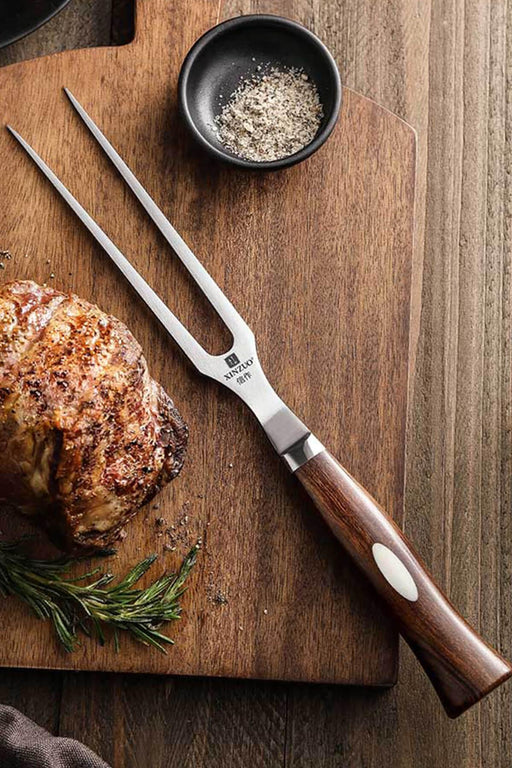
Carving forks are essential tools in the kitchen for anyone who takes their meat preparation seriously. They are designed to hold meat steady while it is being sliced, ensuring clean and precise cuts every time. Whether you are preparing a Sunday roast, carving a holiday turkey, or slicing a perfectly grilled steak, the right carving fork can make all the difference. This guide provides insights into choosing the right carving fork, proper usage, and maintenance tips to enhance your meat carving experience.
Understanding Carving Forks
Carving forks, often referred to as meat forks, are typically two-pronged tools that provide stability and control when slicing meat. They are an integral part of a carving set, which usually includes a carving knife.
Features of a Good Carving Fork
- Material: High-quality stainless steel is the preferred material for prongs as it is durable and resistant to rust.
- Handle: Comfort is key, so look for ergonomic designs that offer a firm grip.
- Length: Longer forks can reach deeper into larger cuts of meat, providing better control.
- Balance: A well-balanced fork for meat enhances precision and control.
Choosing the Right Carving Fork
Selecting the best carving fork involves considering the type of meat you frequently prepare and the size of your cuts. For instance, a meat carving fork for turkey may differ slightly from one used for smaller cuts like pork or lamb.
Types of Carving Forks
- Traditional Carving Fork: Best for large roasts and whole poultry.
- BBQ Fork: Designed for use with grilled meats, typically longer and more robust.
- Serving Fork: Often used in formal dining settings for transferring meat slices from the platter to the plate.
Using a Carving Fork Correctly
Proper use of a carving meat fork can enhance safety and efficiency in the kitchen. Here are some tips for optimal usage:
- Always insert the fork prongs into the meat at an angle to secure it effectively.
- Carve with the knife in your dominant hand and the fork in the other to maintain stability.
- Use smooth, even strokes with the knife to avoid tearing the meat.
Maintaining Your Carving Fork
Proper maintenance extends the life of your carving fork and ensures hygienic food preparation. Consider the following maintenance tips:
- Clean the fork immediately after use to prevent food residue from hardening.
- Hand wash with mild detergent and warm water to preserve the material and finish.
- Dry thoroughly to prevent rusting, especially if your fork is not stainless steel.
- Store in a dry place, ideally in a knife block or drawer with a sheath.
Conclusion
Whether you’re an aspiring chef or a home cook, mastering the use of a carving fork can elevate your culinary skills. By choosing the right carving forks and maintaining them properly, you ensure both the quality of your meals and the longevity of your kitchen tools. A well-crafted carving fork is more than just a tool; it’s an investment in the art of meat preparation.